Your business is successful. But too much still depends on you.
Everything still seems to bottleneck through you. You’re switched on 24/7, and the business follows you home. So I work alongside you and your team to make the business less dependent on you, giving you more of your life back.
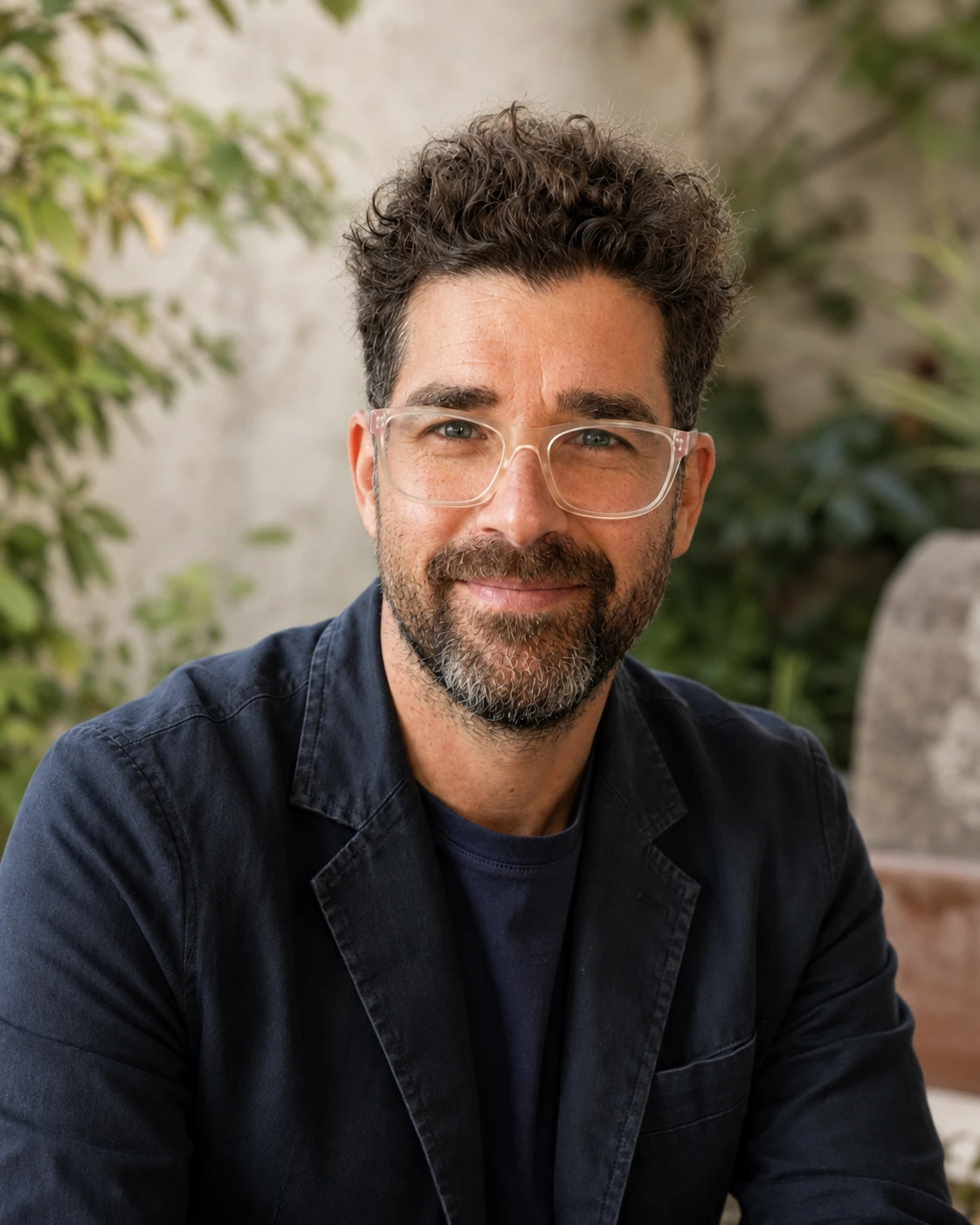
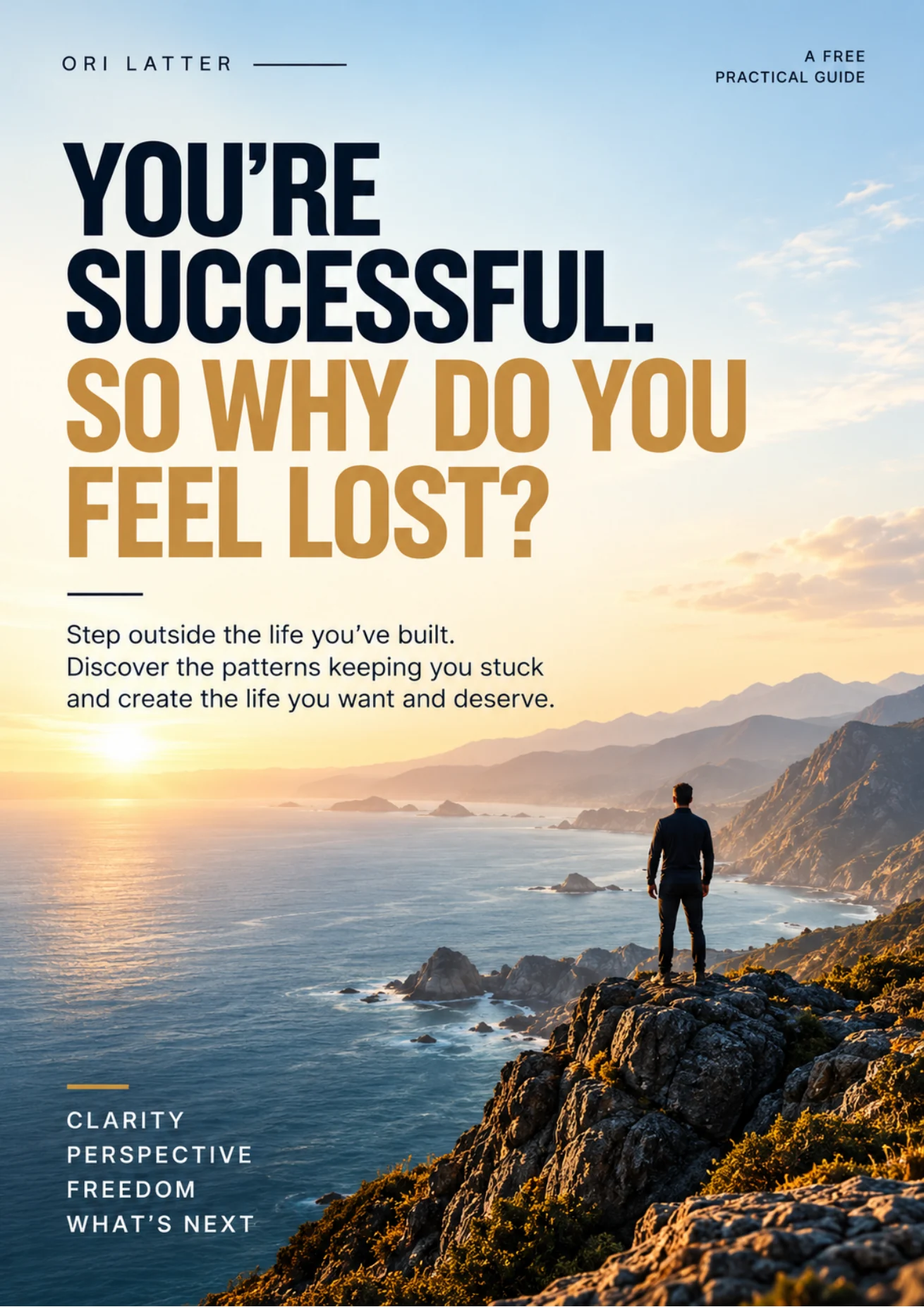
THE FREE CLARITY TOOLKIT / 10 MINUTES · 5 PAGES
You're Successful.
So Why Do You
Feel Lost?
Step outside the life you've built. Discover the patterns keeping you stuck and create the life you want and deserve.
A short, practical exercise for men who've built a successful life but know something needs to change. Step back, spot the patterns keeping you stuck, and start creating the life you want and deserve.
GET THE FREE WORKBOOKFree PDF · 10-minute perspective shift · No obligation
Things don’t flow like they used to.
Maybe you are still signing off too much. Maybe a senior hire never really took ownership. Maybe the leadership team avoids saying what they really think. Or the same important project keeps getting stuck.
The problems may look different, but they often feed each other. Fixing one in isolation rarely fixes what keeps bringing it back.
And the cost isn’t only felt at work. You have less energy, less patience and less of yourself left when you get home. Even when you’re with the people you love, part of you is still running the business.
What you can see is only part of the story.
Most repeating business problems have a visible part and a less visible part. I work with both.
“Ori Latter has a gift. He can see through the chaos and chatter of a business … the stuff that really matters.”
When founders bring me in
You might call me when one of these starts costing you time, energy, good people or opportunities.
You are exhausted and still carrying too much
Important decisions, difficult clients and problems still land with you.
People are not saying what they really think
Meetings stay polite, but the real disagreement carries on afterwards.
Growth is getting harder
You have more people and more meetings, but not enough is getting decided or done.
A senior hire still cannot lead without you
They have the title, but the team still comes to you for the final answer.
People keep checking with you
They have responsibility, but when the stakes rise they wait for your approval.
The market is changing faster than the company
AI, restructuring or new competition is exposing decisions and habits that used to be good enough.
Sometimes the work is not about fixing what is wrong. It is about seeing what the business is trying to become, and what is getting in the way.

I work within the business, with the people and patterns shaping it.
I help you see where you are holding too much, where others could step up, and what is stopping that from happening.
Sometimes that means challenging your own habits. Sometimes it means helping someone who has lost their spark find it again, spotting strengths that have been missed, or seeing who is ready for more before anyone else does.
I’m not a team-building coach. I work with the real people and pressures already inside the business, so more capability grows around you and less keeps coming back to you.
A business that does not need you in every important decision.
Your team tells you when they disagree, makes decisions without checking with you and deals with problems before they reach your desk.
You stop being the person who solves everything and become the person who creates other leaders.
You can leave work without continuing to run the business in your head.
Trust
People tell you the truth, including when they think you are wrong.
Initiative
People see a problem and deal with it instead of waiting for you.
Creativity
New ideas come from across the business, not only from you.
Freedom
You can switch off because the business does not stop when you do.
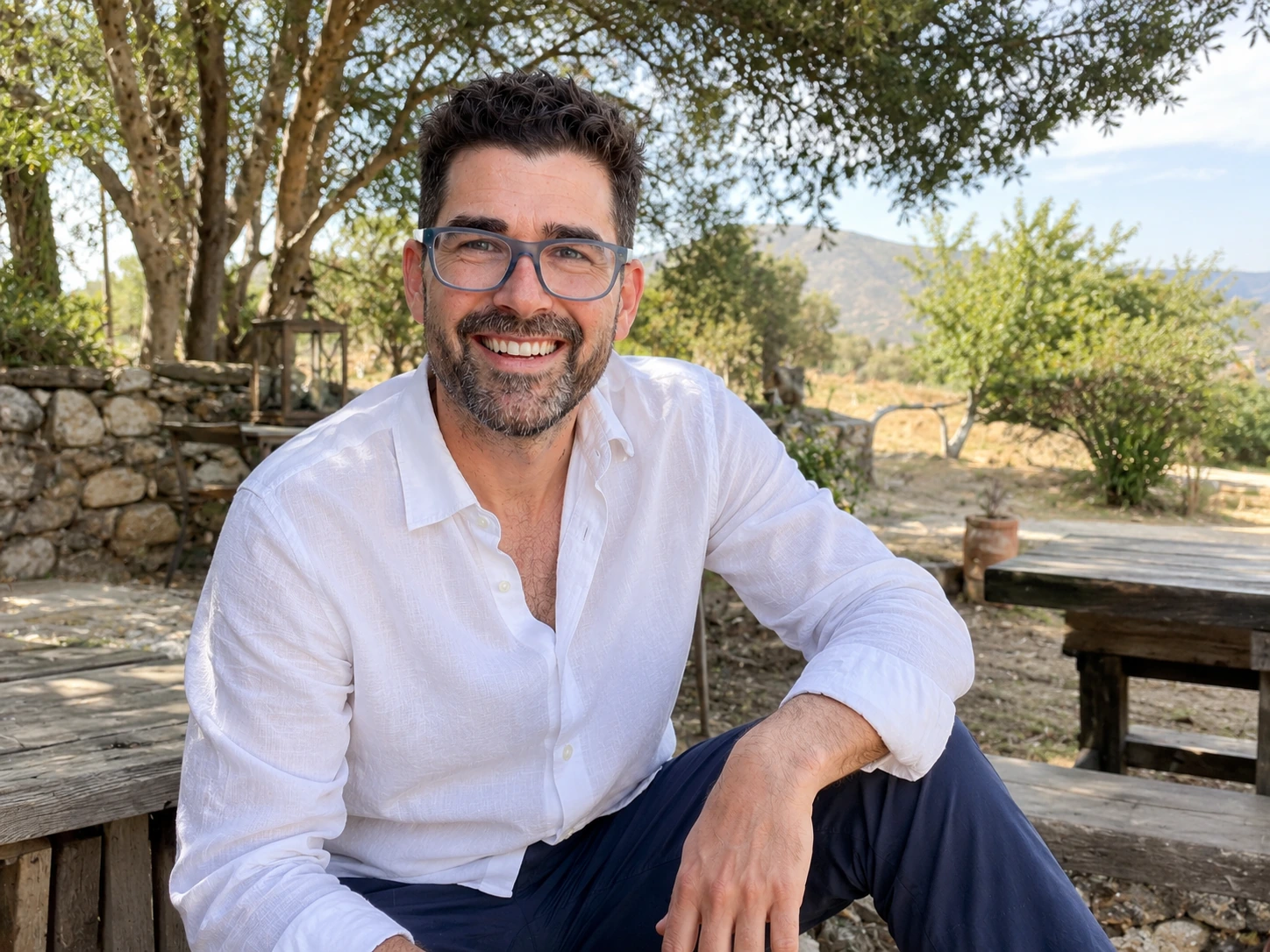
I’ve spent my working life looking beneath the surface.
I got into this work because I love helping people connect the dots between what is visible and what is happening underneath.
I spent more than 15 years as a photographer, filmmaker and business owner, learning to notice what other people missed, understand people quickly and turn complexity into something clear.
I later trained as a psychotherapeutic counsellor and have spent more than a decade working with individuals, groups, founders and leadership teams. Those worlds now come together in the way I work: I look at the business, the people inside it and what happens between them.
Some conversations need a different kind of room.
I do some of my best work outdoors.
Away from meeting rooms, screens and familiar roles, people often think differently and speak more freely. When it suits the work, I take clients walking or hiking to create enough space for a different kind of conversation.
Not every piece of work belongs outdoors. Some conversations open there in a way they simply do not indoors.

for your vision to come to life.
This work asks something of you too.
I am not a neutral observer who comes in to fix everyone else. The work only becomes useful if the founder is willing to be part of it.
Too much on your plate.
Josh had become the quality-control system for the company without fully realising it. He was involved in almost everything, checking, correcting and stepping back in whenever he felt the standard might slip. The more he rescued, the less room other people had to grow, and the less he valued his own time.
We worked on both sides of that pattern. Josh began valuing his time far more and stopped taking work back, while the people around him had more room to step up. More decisions stayed with the team, people started showing more of what they were capable of, and Josh could focus on the work only he could do.
Before we speak
Is this only for founders?
No. Founders are the main focus of this work, but I also work with individual leaders and leadership teams when that is where the challenge sits.
Is this executive coaching?
Not in the usual sense. I may work one-to-one with you, but I also step into the business and work with the people, relationships and situations shaping what is happening.
What if I’m part of the problem?
Then we look at that too. Founders shape how a business works, often without realising it. The point is not blame. It is seeing what keeps the pattern in place and what needs to change.
Do you need to work with my team?
Not always. Sometimes the work starts with you. But if the problem lives between people, I would rather work with the people involved than spend months talking about them with you.
What if I don’t really know what the problem is?
That’s often where the work starts. The thing causing the most frustration is not always the thing driving it. We look at what keeps happening, where things get stuck and what may be underneath it.
If we work together.
We start with a minimum of three months.
I may work one-to-one with you, with the leadership team, with selected people in the business, or in the middle of a difficult decision, project or relationship. We work where the problem is actually happening.
Tell me what is happening.
You do not need to know what to call the problem. Tell me what is happening, what keeps repeating and what you have already tried.
We will use the hour to get clear on what is happening and whether I am the right person to help.
BOOK A FREE 60-MINUTE CONVERSATIONTell me what is happening.
Book a call if you are ready to talk, or send me a short note if you would rather start there.
Privacy notice
This notice explains how personal information may be handled when you use this website, request a free resource or contact me about my work.
Who I am
Ori Latter is a Leadership & Organisational Partner. For the purposes of UK data protection law, I am the controller of personal information I receive directly in connection with my work.
You can contact me through the Contact page or via LinkedIn.
Information I may receive
I may receive personal information when you use an enquiry or resource-download form on this site or when you:
- submit an enquiry through the website;
- request the free workbook through the resource-download form;
- book a conversation through Calendly;
- contact or connect with me through LinkedIn;
- become a client or prospective client; or
- otherwise choose to provide information to me.
This may include your name, email address, organisation, role, booking information, marketing preference and anything you choose to tell me about the situation you want to discuss.
How I use information
I use personal information to provide resources you request, respond to enquiries, arrange conversations, assess whether working together makes sense, provide agreed services, maintain professional and business records, protect the security of the website and comply with legal obligations. Requesting a free workbook does not, by itself, subscribe you to marketing emails.
If you separately choose an optional marketing checkbox, I may use your email address to send occasional notes relevant to my work. You can withdraw that choice at any time. The checkbox is not required to receive a free resource.
Lawful bases
Depending on the circumstances, I may process information because it is necessary to take steps at your request before entering into a contract, to perform a contract, to meet a legal obligation, or because I have a legitimate interest in running and protecting my business and responding to genuine enquiries.
Where you actively opt in to receive occasional marketing emails, that marketing is based on your consent.
Third-party services
The website is hosted by Netlify, which also processes enquiry and resource-download form submissions and limited technical information needed to deliver and protect the site. The website also links to third-party services including Calendly and LinkedIn. Those providers may process information under their own privacy terms.
Some service providers may process information outside the UK. Where this applies, the relevant provider is responsible for using an appropriate legal mechanism for international transfers.
How long information is kept
I keep enquiry information only for as long as it is reasonably needed to respond, follow up or establish whether we will work together. Workbook-request information is retained only as reasonably needed to manage the request and any separately given marketing consent. Marketing contact details are kept until you unsubscribe, withdraw consent, or they are no longer needed for that purpose. If you become a client, some professional, contractual, financial or administrative records may need to be kept for longer in order to provide the service, maintain appropriate records or meet legal obligations.
Your rights
Depending on the circumstances, you may have rights to ask for access to your personal information, correction, deletion, restriction of processing, data portability, or to object to certain processing.
If you have a concern, please contact me first so I can try to resolve it. You also have the right to complain to the UK Information Commissioner’s Office (ICO): ico.org.uk ↗.
Cookies and analytics
This site does not currently use non-essential advertising or analytics cookies. The enquiry form itself does not require marketing cookies. Links to external services may set cookies once you leave this site and visit their platforms.
Changes to this notice
This notice may be updated as the website, services or technology used by the site changes. The date at the top will show when it was last revised.